Shad talks about his buddy

One day, a friendly young kitten was found wandering the streets of Thessaloniki in Greece.  The lady who found this kitten with no name took pity on him because he had no one to care for him and he had suffered an injury.  Despite dragging a lifeless paw around with him, his happy go-lucky nature shone through and he was taken to a shelter to be fostered.  The volunteers at the shelter did all they could to help him, along with the many other kittens and cats they rescue.  He was named Pasas, fed and watered, played with and cuddled, kept free of fleas and parasites, safe and warm.  But they did not have the resources to treat his injured paw which remained limp by his side.


As the weeks turned into months, the plight of this plucky little chap was captured by the Greek Cat Welfare Society, a UK charity which has been working in Greece and the Greek Islands for the last 22 years, neutering colonies of stray cats and educating and supporting local people to have their pets (both cats and doggies) de-sexed.  Despite the lack of food and care and sadly some cat-hating people who poison them and dispose of them cruelly, there are still many thousands of unwanted cats roaming the streets in Greece thanks to our phenomenal potential to breed.


Anyway, to continue the story, a photo of Pasas the Greek boy with the floppy paw was printed in the Greek Cat Welfare Society’s newsletter and caught the eye of an English lady with a love for the feline variety.  She offered him a home and so began the next phase of his journey through life.  He had to be micro-chipped and vaccinated against rabies in order to receive his pet passport, before he was put on a flight to Paris and then driven from Paris all the way to the Sussex coast.  This was all generously paid for by the Greek Cat Welfare Society.


Young Pasas was renamed Zoukia and spent the first couple of weeks in his new home hiding in the cupboard or behind the bed, staring wide-eyed whenever his new owner looked at him.  It must have been scary and stressful to endure the 10 hour journey in a cat box with all those strange noises of the plane and the cars before being taken to a totally different place that smelled and looked unfamiliar and was already occupied by 4 other English rescue cats who didn’t even speak the same language!  But Zoukia is a resilient boy with an instinct to survive and coped admirably with the challenges he faced.  His new owner quickly whipped him off to the vets to get that droopy paw sorted out, especially as he had now developed an ulcer on it where it was always rubbing against the floor.  He was diagnosed with a brachial plexus paralysis (damage to a nerve resulting in a limp paw with no feeling) probably caused by a car accident and the vet recommended amputation.


Now you would think that this poor creature, having had such a bad start in life, would end up a shy nervous little sausage barely able to hobble his way to the food bowl for a bit of bread and dripping.  But I can assure you from personal experience of being swiped at by this cheeky little monster on several occasions, he is strong-willed and adventurous and he rules the roost.  He enjoys life and seems oblivious to the fact that he has a paw missing.  May be he wouldn’t fall off fences and stumble out of trees so much if he remembered, but this happy go-lucky cat lives life to the full, and even though he occasionally loses his balance, it doesn’t stop him leaping into the air to catch a moth or hurtling down the garden at top speed after one of the other cats.  What an enormous change from the streets of Thessaloniki city where he grew up.
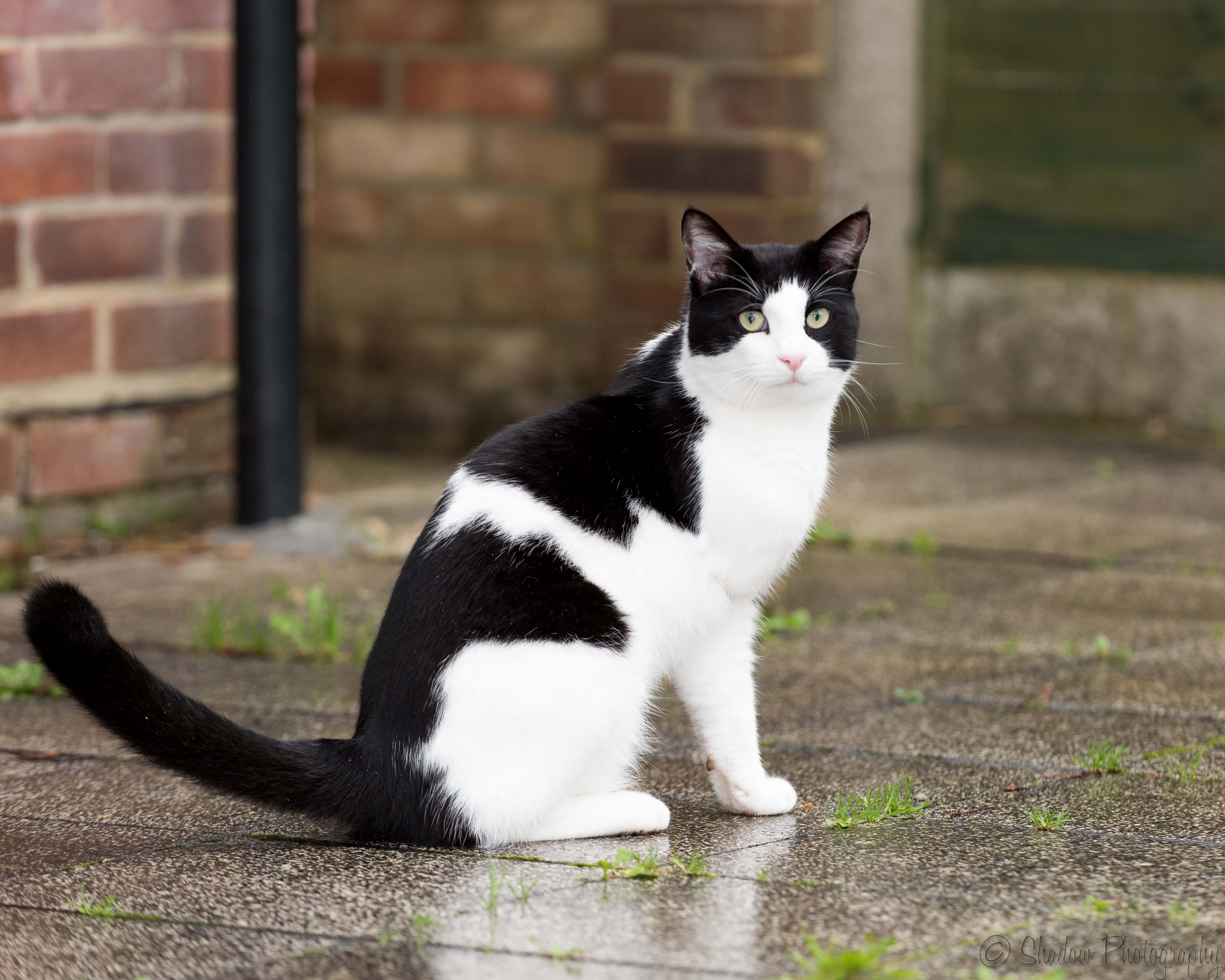
DSC_1224

Shadow Photography’s Autumn Campaign

Shadow Photography is the business John and I started almost 2 years ago and, at the risk of sounding self-indulgent, John and I have worked hard to develop it into a viable prospect.  Not many cats have the opportunity to learn new skills and meet interesting people from all walks of life so I feel quite proud to be part of the project.  I try to make sure John feels like he’s in charge and I have to admit I couldn’t do it without him – he can lift heavy loads and he has opposable thumbs!  Don’t worry, he’s used to my cheek!

The Sussex Bridal Planner – Shadow-Photography


The Sussex Bridal Planner   Issue 7

Check out Page 35

I thought you might like to see the Shadow Photography advertising campaign that has been designed this year.  Am I sounding executive enough yet?!  It may not be an international conglomerate, but its mine and John’s baby and as managing director I’ve decided to share with you a couple of the ideas we’ve had to promote the business.  Do you recognise the cat in the background on one of the ads?  Its a good-looking ginger-striped old mate of mine.

Shadow-Photography Pets

Ginger


Shad does the Cat Protection annual summer fête

I just love days like this, waking up to the sound of birds singing and the early morning sun warming the air, I felt an optimism that you feel when spring is just around the corner.  Overcome with an urge to share the moment with my John, I hopped on to the bed and stood on his chest as he lay there pretending to be asleep.  I started kneading the duvet and purring which is usually an effective way of getting the old fella to stir.  Failing that, a good chomp on a big toe does the trick!  Today we had plans that I was looking forward to – a hearty breakfast followed by a jaunt to Clapham Village Hall to show our support for the Cat Protection summer fête.


I had that Sunday morning feeling and was taken by the desire to appreciate the wondrous complexity of my environment.   Like the beauty of the flock of Canadian geese that flew overhead just as John was putting me in the car, the scent of the honey-suckle bush that grows underneath the lounge window, the simplicity of the life of the bumble-bee that buzzed happily across it’s flowers and the comfort of the motor vehicle that allowed us to travel several miles in a short space of time.  As I enjoyed my philosophical ponderings, I looked up at the sky and hoped that the dark clouds would clear in the time for the afternoon.


By the time John and I reached the Linga Longa Café in Findon, the rain was bucketing down and we both got wet just dashing from the car to the door.  They wouldn’t let me sit at the table due to health and safety regulations (although really I think it was because there were other customers there) so I had to eat from a plate on the floor which I’m not used to.  Nevertheless, I had a delicious cooked breakfast (which consisted of a fried egg, a rasher of bacon and some baked beans) which filled my tummy up a treat.


As we arrived at Clapham Village Hall for the fête, there were no marquees in sight, only the vibrant green grass of the rain-soaked fields that framed the venue.   Apparently the volunteers had tried to put the tents up but the strong winds had defeated them so all the action was to be held inside.  John carried me in (as I don’t like getting my paws wet) and I was greeted by lots of smiles and friendly caresses from many of the volunteers who know me and/or John from previous events as well as our photos.  I was in my element, surrounded by cats, cat people, cat pictures, cat paraphernalia and all things cat!  There was a lovely assortment of cats looking for new homes, like Widget (a cheeky 6 month old who charmed everyone with his playfulness) and Posh (an attractive black girl who had her eye on me).


Incidentally, do you remember Teddy and Tinks, the kittens I told you about a few weeks ago who came into care in a poor condition?  Well you’ll be pleased to hear that they have found a great new family to look after them.  And so has Jasmine, the shy black and white lady I befriended at my mate Ginger’s house.  Since Jasmine moved on, two brothers called Harry and Bertie (the fluffy ginger and black cats pictured here) took up residence in the pen but were soon re-homed to a nice family, which left a space for a lovely cat called Milly who I am hoping to meet next weekend.  You’ll also be pleased to hear that a few hundred pounds were raised at the fête which will go towards caring for the cats and cheeky Widget found a new home that day too.  The money was raised through generous donations, sales of cakes and drinks and cat related bric-a-brac.  But it wouldn’t surprise me if a large portion of the money came from John and a fosterer called Penny who went mad on the tombola, buying tickets galore.  Penny ended up with a bag full of goodies she could hardly carry and John won 3 cuddly toys, 2 bottles of beer, 2 bottles of wine, 1 bottle of coffee liqueur, a cat calendar and a bottle of mouthwash.  I guess we all know what to expect for our birthday presents this year!!

Shad’s big cousins on the Isle of Wight

Regular readers will know that John and I have visited the Isle of Wight Zoo before and enjoyed taking some fab pictures of the big cats that live there.  Remember Casper the white lion and Zena the one-eyed white tiger?  Don’t get me started about the unethical practice that surrounds the breeding of white tigers!  Anyway, the Zoo on Sandown’s chalky coast is well known for its lemurs and rescued big cats, some of which come from circus and entertainment backgrounds, having been rejected by the industry once they served their purpose.
This trip was a Really Wild Photography Workshop that is offered by the Zoo and hosted by professional wildlife photographer Karen-Jane Dudley.  Karen-Jane was excited to see a domestic cat like me in the group and said the big cats would be very curious to see me.  We exchanged tips on the art of wildlife photography and she told me some stories from her experiences in South Africa where she travels every year to capture beautiful images of the animals, like the zebras, leopards and birds of prey.

The workshop included lunch (I had fish pie, one of my favourites) and ‘behind the scenes’ access to a number of specially designed photography stations so that we could view the cats close-up.  As I peered through one of the lens ports, my feline senses tingled as the stunningly striped Aysha came trotting through the water towards me.  She was very inquisitive when she picked up my scent and looked enquiringly at me with her bold black and orange eyes before deciding that the water was far more interesting and splashing off in another direction.   Aysha is a playful 16 year old currently enjoying her retirement at the Zoo along with her brother Diamond, a laid-back boy like me.


Lions are one of the most iconic animals in the world and they are quite sociable in comparison to many of the other big cats that roam the plains of Africa.  I tried to get a few shots of Casper but he was being quite standoffish that day so I turned my attention to Charlie Brown, a tawny lion with a gentle spirit who gazed idly towards me before turning his attention to a noise coming from across the way.  It was Aysha huffing and chuffing with joy as she scampered towards a jet of water flowing from a hosepipe.  The keepers were in the enclosure playing with the tigers who seemed to love the sound and feel of the water being splattered around.  Then it was feeding time and the keepers placed whole pieces of meat tied to various items such as a barrel or a log into the enclosure, making mealtime a bit more of a challenge for these hungry hunters and helping to keep them stimulated.


We also had a special treat when we got the opportunity to actually go inside one of the enclosures.  Not with the tigers though!  Probably not a good idea!  But with the ring-tailed lemurs, a good-natured bunch of primates that come from Southern Madagascar and spend most of their time in trees.  It was quite funny being in the pen and looking out at the on-lookers looking in!  One of the visitors was overheard saying that the lemurs must be a type of monkey and Michelle (one of the alpha females of the group) was not amused.  Apparently lemurs are prosimians, a sub-group of primates that include tarsiers and bushbabies.  They lack the dexterity of monkeys and apes but they do have specially adapted eyes that enhance their night vision.  They certainly considered themselves to be more evolved, but I’m not so sure.  Don’t tell Michelle!

Shad and his mates

Here are some pictures of two very cute kittens that are currently residing in one of the Cat Protection’s pens in West Sussex.  Some of you may know that John takes photos of the cats for his friend who is a fosterer.  These two poppets came into care from a lady who had lots of cats that were breeding willy-nilly and had never received any veterinary treatment.  Unfortunately this type of situation has a terrible impact on the lives of the cats and the litters born to the females in the household, so these two cuties arrived in the pen with fleas, anaemia, cat flu and conjunctivitis.  Apparently many humans think cats that are related don’t mate but this is not true.  Nature has taught us cats not to be too fussy and it only takes an un-neutered male and female a few seconds alone to make the babies!  You’ll be pleased to hear that Teddy and Tinks are now flea-free, infection-free and feeling much healthier and happier.


The pretty black and white girl is a 2 year old domestic short hair called Jasmine who was surrendered by her owner because she was unhappy and refusing to come indoors, probably due to the noise levels in the house and the unruly children that were causing her stress.  She is friendly, gentle and playful, although a bit shy until she gets to know you.  She has a potential new owner coming to visit her next weekend so let’s hope she is lucky enough to find her forever home soon.


While John and I were in the garden, my mate Ginger came along to check out my photography equipment.  It was good to see my old buddy Ginge and he was very curious about my cameras.  So I started telling him about the importance of using light as a medium and how I store my digital image files, but he cheeky rascal fell asleep on my bag.


I also caught up with my good pal Muffin, the haughty black 5 year old who kept looking through my new binoculars last time I came to visit.  Muffin told me some bad news about my old chum Monty, a blue British Short Hair who was in the pen last year for about 10 weeks.  He was difficult to re-home because he has irritable bowel syndrome and can poop for England!  Fortunately, a nice lady saw past his dodgy tummy and fell for his charming and debonair personality.  Poor Monty was hit by a car a week ago and suffered some serious injuries.  To make matters worse, his owner who loves him very much did not have him insured.  Surgery, stitches, bandages, pain-killers, antibiotics and £2,600 later, he is now home but still not out of the woods.  His recovery will be slow and uncomfortable and his dedicated owner is caring for him while he is on cage-rest as well as working extra hours and taking in foreign students to pay off her credit card bills.  I’m sure you’ll join me in wishing Monty every bit of luck and I hope he pulls through.


Shad gets a pair of binoculars

John bought me a zazzy pair of binoculars for my birthday this year and we decided to road-test them on Sunday with a trip to a nature reserve.  It became obvious very quickly that the strap was too long for a wearer whose neck is so close to the ground.  But the helpful staff performed a bit of nifty strap-work (despite curious glances from on-lookers) and soon I was kitted out and ready for action.  With a meow of appreciation, I trotted off down the muddy path that twisted its way through the tall trees and thick bramble to the wonders nature had in store for us that day.

Normally, John and I both have cameras and work as a team to get the best shots we can, but today I was ‘off-duty’ and determined to relax and enjoy the surroundings.  I could hear the birds singing, but they were incredibly difficult to spot, possibly because they were a little nervous about being watched by an adventurous sleek black (ever so slightly portly) cat like me!  But with my extraordinary patience and enquiring mind, I was able to spy a few good-looking birds, including Canadian geese, mallard ducks, goldfinches, greenfinches and the one I was most excited about, the great spotted woodpecker.  Ok I’ll be honest, John was much better at spotting the birds than me, by the time I got my fab new binoculars lined up to the right place, the cheeky little minxes had flown off.

While we were sitting in the hide-out watching the wading birds dipping their heads beneath the surface of the streams and marshes, the swans and black-headed gulls flew overhead and we caught sight of a small group of deer resting beneath a large leafy oak tree, probably planning their next meal or deciding on a safe place to sleep that night.  As we walked back through the woodland, panting somewhat because it was uphill, we noticed a field of cows that all had horns and I had to laugh when one of them used her horns to have a good scratch.

On the way home, we stopped at a friend’s house for refreshments and I bumped into my old mate Muffin sunning herself in the back garden.  I entertained her with tales of my adventures through the forest and the fascinating species of wildlife I had witnessed with my magnificent binoculars and she was very impressed.

Shad admires the Amur

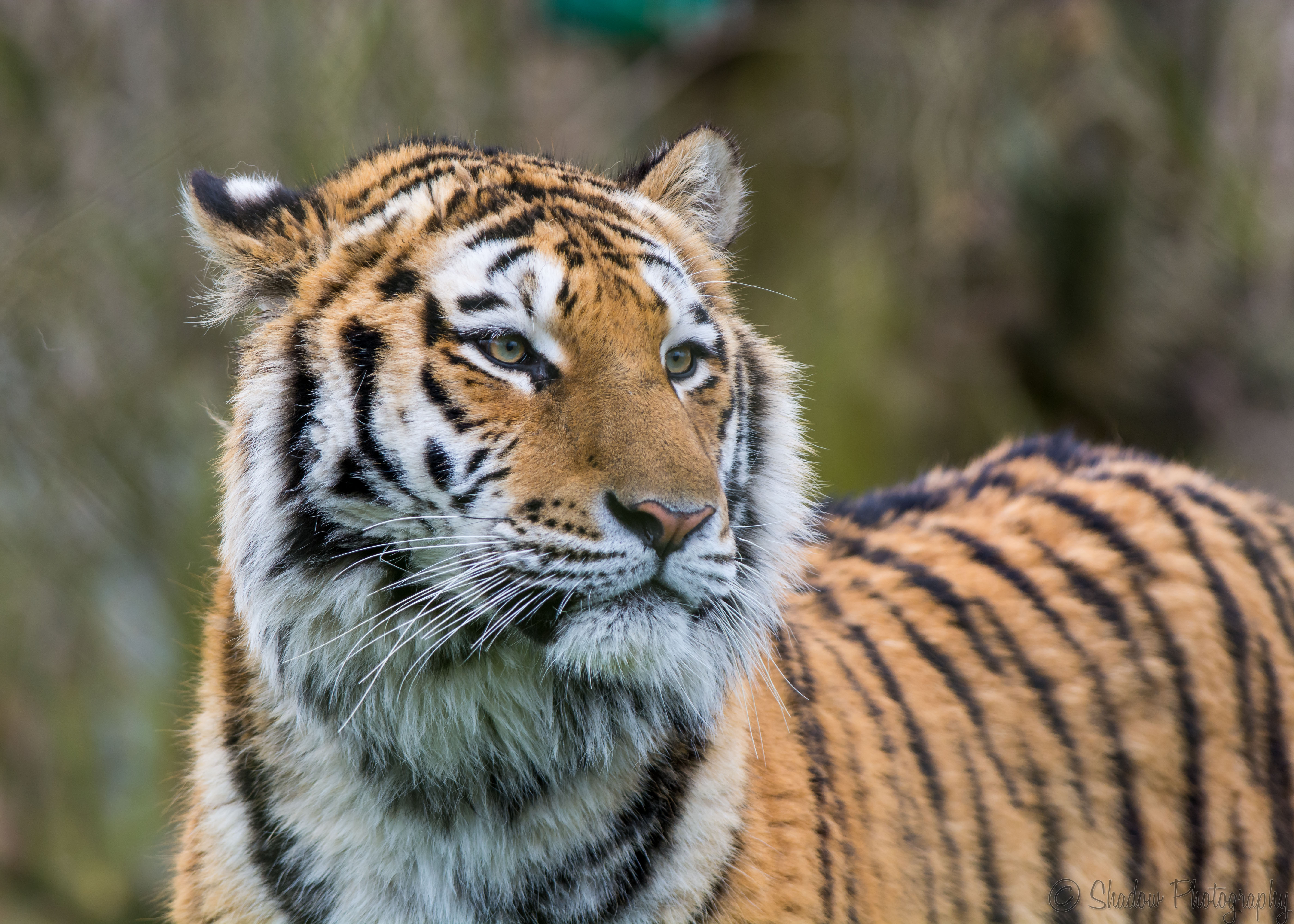
This beautiful guy is called Bagai (affectionately known by us photographers as Baggie) and resides at Marwell Wildlife Park.  He is around 18 months old and the keepers are hoping he will eventually breed with his wife-to-be Milla, after they are introduced to each other later this year.  He is an Amur tiger (also known as Siberian tiger) and is characterised by his bold rusty-yellow colour with narrow black/brown stripes, short legs and long tail, and supple muscular body.

Bagai

I have a strong affinity for my big-cat kin, particularly the tigers, because of their ongoing crusade to survive against the odds.  There are now more Amur tigers in captivity than there are in the wild due to two main threats – poaching and habitat destruction. They are poached mainly to satisfy the demand for traditional oriental medicinal products made out of parts of the tiger.  Some gruesome examples include crushed tiger bone added to wine as a tonic and eyeballs rolled into pills as a cure for convulsions.  Revolting and totally without scientific basis.  Habitat destruction is often the result of increased demand for land as the human population grows, as well as intensified logging and agriculture for economic reasons. Habitat destruction in their natural environments of the Russian Far East, China and the Korean peninsula has not only removed the vegetation itself, which affects the soil and water balance, but also removed a significant portion of the tigers’ prey species, making them hungry and less inclined to breed.  Other threats include urban expansion, road construction, mining, fires and inadequate law enforcement.

There are nine recognised subspecies of tiger. Of these, the Caspian, Bali and Javan tigers are extinct and the South China tiger has not been sighted in the wild for over 25 years. The Indian or Bengal tiger is the most numerous but it is estimated that the total population is under 2,500 individuals.  In the 1940s, the Amur tiger was on the brink of extinction, with no more than 40 individuals remaining in the wild.  But thanks to vigorous anti-poaching and other conservation efforts in Russia with support from organisations such as the World Wildlife Fund, the population has recovered in the last decade and currently remains at around 400 individuals.  It is predicted that there will be none left in the wild within the next decade if human-kind does not take drastic action to save them.


But fear not my friends, it is not all bad news.  Big cats are prolific breeders and, given enough space, prey and protection, tigers can recover and re-claim their status as lord of the jungle. If you want to help, check out the WWF website for some ideas, such as sending an encouraging postcard to the rangers, the unsung heroes who work under harsh conditions on the frontlines to keep vulnerable wild tigers safe.  One thing all humans can do is ensure that any items they buy do not contain wild animal parts or lead to the unethical treatment of wild animals. Check that your paper and wood products are certified, that food products use certified sustainable palm oil and that your coffee was grown in harmony with its environment.

Shad shoots more waifs and strays

John and I were hanging out with our friend who fosters the homeless cats.  Regular readers might remember about the pen for waifs and strays in her back garden.  John’s daughter Natasha joined us in the pen and we took these photos.  Its not easy taking photos in the pen due to the limited space and not wanting to frighten the residents.  But just look how cute these moggies are.

The chunky black and white is a 2 year old boy called Bandit.  He had just been to the vets to have ‘the chop’ the day before.  (I’ve been there mate!!)  Anyway, he is a really vocal cat, and the veterinary nurse said he meowed and meowed so much they could hear him in the waiting room.  Then apparently he got into a punch up with the cat next to him, poking his paws through the gaps in the cage, trying to bop him on the noggin.  Anyway, enough gossiping!  He was surrendered by his owner because she had to move house and couldn’t take him.

The other two tiny creatures are Tickle (11 years old) and Whiskey (6 years old).  These friendly little ladies have lived most of their lives outside and were not being cared for by their owner who by all accounts preferred a drink than to spend time caring for the cats.  They told me how happy they were to be safe and warm and dry and fed and stroked every day.  Good luck to Whiskey and Tickle and Bandit and all the pussy cats looking for homes this Christmas.

Shad does Paradise Wildlife Park

The weatherman said it would be sunny and dry on Sunday so despite the cold, John and I wrapped ourselves up in woolly scarves and hats and headed outdoors.  As we cruised along the M25 that morning, there was not a glimpse of sun in sight.  But we were past the point of no return and had already paid £2 at the Dartford Tunnel, so we decided to press on, in true British fashion!  We found a nice spot in the car park and dashed out of the car with full bladders in need of relief before standing in the short queue to get our tickets.  A large grey fluffy sausage on a stick caught my eye and it turned out to be a boom pole with a microphone attached to the end.  It was being carried by a small camera crew who were with a group of people that included a very minor celebrity, David Van Day from Dollar, taking the private tour experience.

We wandered in through the gates to an enclosure close by and I felt the spirit of the wilderness as we came face to face with the grey wolves.  There are apparently almost 40 subspecies of wild dogs including Arctic and Arabian wolves and the dingo, and they occupy a range of habitats including Arctic tundra, prairies and forests.  Young grey wolves are born blind and deaf in dens and rely on their mothers as well as support from the pack for warmth and food.  Grey wolves once had the largest natural distribution of any mammal except humans but unfortunately they can no longer claim this record as they have been lost from much of their former lands.

Opposite the wolves was one of my most handsome and dignified big cat cousins, the white tiger.  Despite the grey skies and drizzle, I felt all warm and fuzzy inside as I gazed in appreciation at this beautiful beast.  The white tiger’s history is sad and thorny because they have been in-bred by unscrupulous breeders out to make money from exhibiting them and they have sadly suffered physical abnormalities as a result.  They are rare in the wild and I don’t know about this particular tiger’s past, but its cream tones and chocolate brown stripes made it unusual and stunning to look at.  We watched him sitting calmly in his enclosure when one of the camels across the way started snorting and honking and it caught the tiger’s attention, so he trotted off to the other side of his paddock to investigate.

The camels were amusing, with their long knobbly legs, goofy teeth and gangly stance, and I heard a passer-by crack a joke about one of them getting the ‘ump!  Oh dear.  These camels had two humps which store fat for use as energy when food is scarce.  A camel can go a week or more without water and can last several months without food.  But you’d think the meerkats wouldn’t last five minutes without food the way they tucked into their grub when the keeper was feeding them.  These happy little creatures were a pleasure to watch and clearly enjoyed living in groups, chirping and grumbling at each other, playing together and cuddling.  Here’s a picture of one of them warming his belly under the heat lamp.

John and I needed to warm up too so we sat in the Tiger Tree Café for a while to shelter from the rain and dry off a bit.  Don’t worry, John didn’t get his belly out!  The café overlooked the tiger enclosure which contained 3 handsome tigers who were quite frisky, hopping across their wooden climbing frame and teasing each other.  I could hear these little low-pitched rumbles as they constantly chatted with each other, playfully growling and huffing.

The highlight had to be the white lion pride which consisted of a noble majestic male with full mane, 2 females and a lovely young cub who was born earlier this year. The pride sat together in their enclosure looking relaxed and contented whilst the male prowled back and forth, letting the onlookers know that he was in charge. He looked at me as he ambled towards the front of the enclosure where I was standing and I puffed my little chest out as much as could, so he climbed up the rock hill and thundered this almighty roar that reverberated in my ears. I imagined how that booming noise must rumble across the safari plains of his native environment of South Africa, letting all predators know that he is the king of the jungle. He looked just like Simba from the Lion King.

Shad talks about Snow Leopards

Taking photos of wildlife is one of my favourite things to do, and I can often be found lurking outside enclosures at zoos and animal sanctuaries, waiting for the perfect shot.  It requires a calm demeanour, patience and a steady paw to trigger that shutter at precisely the right moment!  I particularly enjoy taking pictures of big cats because they’re part of my extensive feline family and I’m fascinated by the similarity of their mannerisms to mine.

I’ve spent many happy hours watching the snow leopards at Marwell in Hampshire yawning, stretching, playing and grooming.  However, like most cats, they spend an enormous amount of time snoozing, hence the need for patience and stealth when trying to capture an exciting moment.  Like the time I caught on camera the snow leopard cubs born in April 2013 as they took their first steps outside of their den close to proud parents Irina (mum) and Indeever (dad).

Unfortunately, these magnificent creatures are in trouble, and only humans can help.  It saddens me to say that the World Wildlife Fund estimate there are only 4,000 to 6,500 snow leopards left alive today in the wild and numbers are dwindling as a result of poaching, hunting, climate change, and loss of habitat and natural prey.  However, an international forum was established last year to outline urgent actions and a global strategy to conserve these rare animals and you can read more about that in an article I found in the South China Morning Post this week.

http://www.scmp.com/comment/insight-opinion/article/1336567/dont-let-snow-leopard-become-mere-memory

I love the idea of humans from different countries working together to protect the snow leopards and I have no doubt that their combined efforts will have other positive consequences such as preserving biodiversity, protecting other endangered species, supporting rural development and managing wildlife honourably.


Did you know that snow leopards hiss, meow and growl but don’t roar like other big cats?  They live in the cold high mountains across Europe and Central Asia in countries such as Afghanistan, China, India, Mongolia, Nepal, Pakistan, Russia and Kazakhstan.  Their white-grey coats help them blend in with the steep rocky terrain and their long tails and powerful builds provide balance and help them stay warm.