Shad snaps the smooth swift surfers

The recent wet and windy weather has sadly wreaked havoc for many people across the country.  I can’t imagine what it must feel like to see your home flooded with water and lose your most treasured possessions, like those photos and trinkets that have sentimental value and are irreplaceable.  John and I have been quite fortunate and although there has been some localised flooding and roads blocked, we have not had evacuations, power loss or injuries in the area.  But like many things in life, there are two sides to every story, and we witnessed the fun side of the unsettled weather the other day when we stopped on the sea-front to watch the guys and gals I their wetsuits riding the waves.  They looked so happy out there, pushing their bodies to the limit to harness nature’s powers just for the challenge of it, smiling and waving to us while the strong winds drove salty rain-drops into their faces.

Suddenly I picked up a powerful smell in the air and turned to see a pretty blonde canine whose enthusiasm for the outdoors bordered on bonkers!  Despite the pungent smell of wet dog (bet you thought I was getting a whiff of something else!), I chuckled to myself as I watched her bounding across the damp sand and shingle to the water’s edge to fetch a stick and go running happily back to her master for another go.  Dogs seem to get such a thrill from pleasing their loved ones and demonstrating their loyalty and dependence.  I think it’s important to point out here that cats are devoted too, and depend on humans for care and nourishment, but they show it in their own unique ways.  I like to surprise everyone after dinner with a mad sprint across the house, leaping into the air to land deftly on a piece of fluff in the carpet, hurtling up to John with my ears back, rubbing my cheeks lovingly against his leg, biting his toe, and then diving into my bed in front of the fire for a nice nap with a sweet innocent look on my face!

We got chatting with some of the onlookers watching the surfers, mostly friends and family members who had come to cheer them on.  They told us that the surfers were very serious about their sport and there was friendly rivalry between the kite-surfers and the wind-surfers, but it was all in good taste and part of the merriment.

Shad visits the otters

Otters are one of my favourite kinds of animals because of their happy disposition and kind-hearted attitudes towards each other.  I defy even the grumpiest of humans to watch them and not smile at their playful antics.  They obviously have their duties to perform such as hunting for food, feeding their young, building dens and protecting their environments, but they also engage in lots of fun behaviours just for the sheer enjoyment.

The Asian Short-Clawed otters (the smallest species of otter) were super sociable, chattering constantly to each other and gobbling up their food with gusto.  Apparently they can vocalise 14 different sounds to communicate with each other and they use their feet to find food under the rocks on the river beds where they live in the wild.  We watched the keepers try to replicate this at feeding time by throwing food in places where the otters had to dig using their sensitive webbed feet and those cheeky rascals didn’t miss a single morsel!  They happily chased each other around their enclosure, playing catch with a pebble and juggling a bit of fruit, squawking at the keepers every time they went by.

Different species will vary in their social structure, and the Eurasian otter is a more solitary animal, like rescue otter Millie.  The keepers have tried to introduce her to a companion on a couple of occasions but Millie prefers to be a singleton, making friends with the keepers instead, so she will remain in her safe permanent home at the Park.  The keepers also care for around 15 to 20 rescue otters every year, often orphaned young, using minimal human intervention and clandestine means to ensure their needs are met so that they can be released back into the wild.

The giant otter lives in family groups and is the most vocal of the otters, keeping in contact with its group through continuous barking and squeaking.  Habitat destruction and hunting for their fur are the major causes of their decline.  We watched Simuni and Akuri charging around their enclosure, posing for the cameras and diving into their water with ease and grace.

The North American River otter is the only river otter found north of Mexico and was at the brink of extinction due to its beautiful coat being used in the 1700-1800s in the fur trade which saw the slaughter of hundreds of thousands of these precious animals.  Thanks to the efforts of conservation and wildlife rehabilitation centres, their numbers are slowly increasing.  River otters are mostly active at night which might be why Hudson and Jasper were sleeping in their shelters when we visited.

Shad does the New Forest Wildlife Park again

This weekend was set to have a dry sunny day (an unusual phenomenon given the seemingly endless rain of recent weeks), so John and Natasha decided to give the New Forest Wildlife Park another whirl.  I woke up on Sunday morning to the fragrant aroma of cream cheese and bacon on bagels.  Mmm!  After a quick nibble on somebody’s breakfast, we packed our equipment and the people donned appropriate outdoor-wear before heading west.  Oh and don’t worry, I normally have a healthy protein-based breakfast but Sundays are special treat days and I’m not one to miss an opportunity!

One of my favourite things about the New Forest conservation park is the environment.  Surrounded by trees and shrubs, it feels like you’re deep in the forest and I half expected one of Robin Hood’s merry men to leap out of the bushes in a pair of tights!  Many of the enclosures are open for the animals to roam freely, such as the sika deer, the rabbits and the wallabies.  When I say open, there are still double gates at the end of each section to ensure the animals don’t stray far.  Of course, the open enclosures are only appropriate for certain creatures, not including the pack of 5 wonderful wolves we saw running around their paddock.  We watched them feed and the keeper gave us a talk, telling us all about how the wolves communicate more by body language than by sound, and how much more active they are than cats (the cheek)!  These beautiful creatures were once found in large numbers in this country but hundreds of years of persecution have exterminated them from our lands, a memory than lingers in the instincts of the wolves we saw making a dash for their food before putting a safe distance between themselves and the humans.

There are so many furry mammals there, like the pole-cats, badgers, water voles, ferrets and the elusive pine-martens who were particularly hard to spot.  I also met some of my most impressive and resourceful cousins, the endangered Scottish wildcats (felis silvestris grampia to give them their Latin name).  They resemble muscular domestic tabby cats, but with thicker coats and bushy black-and-brown ringed tails.  They survived human persecution for five hundred years more than the British wolf did, and over a thousand years more than the British lynx.  They are now only found in Scotland and their intelligence, patience and agility are respected by Highland farmers and gamekeepers who recount tales of the wildcat mother dying to protect her kittens from attack or dipping their paws into shallow water to scoop out fish for dinner.  These misunderstood creatures have been portrayed as ferocious but, like most pussy-cats, they enjoy peace, routine, and personal space, and will only attack if they are hunting for food or feeling cornered.

The distinct whiff of dung hit my nostrils and I caught sight of the long shaggy brown coats of the bison wandering around chewing on the grass.  Even bison have been affected by habitat loss and hunting over the years and are now mostly found on ranches or in areas of conservation.  These particular animals are European bison and they are extinct from the wild.  They might grow to 6 feet tall at the shoulder, 10 feet in length and 1,000 to 2,000 pounds in weight, but their pastimes include rutting and wallowing in mud and they stink.

You have no idea how tempted I was to arch my back, raise my hackles and mock charge sideways towards the little harvest mouse chomping on seeds and grains from a bowl in its glass-fronted pen.  But I am a civilised rational feline who can operate a camera and take part in philosophical debate, so I can certainly exercise restraint over my base urges.  With blunt noses, tiny black eyes and hairy ears, harvest mice are the smallest British rodent, around 5 cm long and weighing a tiny 5 to 10 grams.  They have auburn brown fur with a white underside and their scientific name is micromys minutus (how cute is that!).  They seemed very busy, climbing, building their nests and feeding, so we left them to it, and headed off to see the lynx cat.

I sauntered coyly towards the enclosure that contained the lynx, and my eyes narrowed with envy as I caught sight of her elegant tufty ears and thick fluffy ruff that framed her face.  This Eurasian lynx is called Munchkin and she has a stimulating enclosure on a slope filled with trees, wooden climbing frames and sheltered areas.  We gave each other the obligatory eye contact and subtle ear twitches communicated our understanding of each other’s situations.  This solitary and secretive cat allowed us to watch her for a while before bounding up on to one of her ledges in a tree and surveying us from on high.  The Eurasian lynx was an original native of the British Isles but disappeared from Western Europe due to habitat destruction and human persecution.

Next time I’ll tell you about some creatures I met who made me laugh so much.  They live with their families, have whiskers and offspring called pups, and enjoying romping playfully.

Shad does the franco-english Marwell tour

Have you seen a ‘hippopotame pygmée’ or a ‘singe’ recently?  You would have, if you’d been with John and I at Marwell Wildlife Park this weekend.  Two of John’s friends were visiting from across the Channel and we decided to give them a guided tour of the wonders of the natural world at Marwell.  They came from Marseille which is the second largest city in France after Paris.  Marseille is an urban area with a large population and a rugged rocky coastal landscape, a far cry from the wooded hills and rolling countryside of Winchester where Marwell is situated.  There were 5 of us altogether, including 2 people who spoke both English and French and were able to translate, and one person who spoke French only.  John speaks a little German but that didn’t really help, and I speak cat which I consider a universal language, but that didn’t help much either!!

Have you worked out those French words yet?  The first one is pygmy hippopotamus, and we were lucky enough to get a clear view of a mother with her little female calf who was born on 13th December 2013.  The baby is part of the European Endangered Breeding Programme and is called Gloria, a name chosen by patrons of the zoo and members of the public following an online vote.  ‘Singe’ (pronounced ‘sairnge’) is French for monkey, and there was plenty of monkeying around as we watched the Colobus monkeys strike a pose for the camera and swing across the branches with their long arms and tails.

There was much guffawing at the giraffe area because these tall elegant creatures with big beautiful eyes looked so demure, but when they munched on their dinners, the prolonged chewing action combined with large elf-like ears made an amusing sight.  I held my tail high as a friendly greeting and made chirrup noises to communicate my appreciation of their awesomeness, but I’m small compared to them and I don’t think they saw me.

Unlike the big cats, which spotted me instantly, may be because they smelt me coming.  Not that I have some sort of body odour problem I hasten to add, but more due to the feline ability to convey identity and mood through scent.  Marwell has taken in a new male Amur tiger called Bagai who is 17 months old and is settling into his new environment before being introduced to Milla, a female Amur tiger.  It is hoped that they will produce offspring to help save this highly endangered species which is on the brink of extinction.  Shockingly, the evil poachers continue to trap and kill these magnificent beasts along with many other animals who now struggle to survive in their native environments.  My thanks go to the conservationists across the world and animal welfare groups such as PETA, IFAW and the WSPCA for their efforts in promoting the wellbeing of animals and giving them a voice.

2013 was a busy year for the keepers at Marwell who also welcomed a giant anteater baby born in November.  Little Rojo seemed content and was fully occupied when we saw him in his enclosure with his mum,  digging at a branch with his long fore-claws, looking for insects.  These curious looking creatures are listed as ‘vulnerable’ in the wild and have thick necks and a tubular snout which ends in a tiny mouth opening and nostrils.  They apparently have poor eyesight but a sense of smell 40 times more sensitive than that of humans.

John’s French friends were visibly impressed at how well the animals were cared for and how keen the Brits are to keep animals as happy and healthy as possible.  They went home with lots of photos and good memories from their trip to the zoo, and I improved my language skills and did my bit for anglo-french relations.  So au revoir, c’est la vie and bon voyage!

Shad does the New Forest Wildlife Park

John took me on a forest adventure this weekend to a wildlife park near Ashurst in Southampton.  It’s part of the New Forest, an ecologically rich area of grassland, heathland and woodland in the south-east of England which provides habitats for all kinds of rare and unusual plants, insects, birds and mammals.  The wildlife park is set deep in the forest and surrounded by tall trees that looked to me like giant fortresses topped with emerald-green and nut-brown foliage.  I could feel the eyes of the multitude of shy forest creatures that were hiding in the trees watching me as I trotted along next to John.

We followed the moss-veiled trails that led to some animals that I don’t often get the chance to photograph.  Like the big beefy bison that was lazily munching on some grass.  He appeared peaceful and unconcerned but I had no doubt that one insolent flick of my tail might cause him to lower his solid horned head and charge towards us.  I was pleased to see the lynx, with its short tail and tufts of black hair on its ear-tips, it had large paws and all the characteristics of a finely-tuned stealth survivor.  Then there were the gregarious and industrious giant otters, highly sociable animals who live in extended family groups.  They were most entertaining, sleeping happily together in huddles and playing noisily, barking, snorting and whistling at each other with enthusiasm.

All of these animals are highly endangered, struggling to adapt to habitat loss and fighting for their lives when they are hunted, the bison for their meat and skins, the otters for their velvety pelts and the lynx for their fluffy patterned fur coats.  Despite the humans that are willing to inflict suffering and even wipe out an entire species for the sake of fashion or status, there are many more humans willing to protect what nature has provided us and teach others to do the same.  The New Forest Wildlife Park actively promotes the conservation of animals through rescue work as well as participation in breeding programmes to protect the future of many endangered species, from our native orphaned and injured otters, owls and deer, to the European bison, the little harvest mouse and the rarely seen Scottish wildcat.

This natural forest environment was the perfect area for us to spot much local indigenous wildlife and, when I stopped to listen, I could hear the occasional drumming woodpecker or the scurrying of a squirrel crunching twigs and rustling leaves as it busied itself looking for its next meal.  Also looking for meals were the birds, like the bold robin who landed right in front of us hoping for a bit of John’s sandwich.  Don’t worry, regular readers know I like birds and I’m well in control of my hunting instincts, so the birds are safe with me (although John keeps an eye on me as a precaution)!

http://www.newforestwildlifepark.co.uk/

Shad does Paradise Wildlife Park

The weatherman said it would be sunny and dry on Sunday so despite the cold, John and I wrapped ourselves up in woolly scarves and hats and headed outdoors.  As we cruised along the M25 that morning, there was not a glimpse of sun in sight.  But we were past the point of no return and had already paid £2 at the Dartford Tunnel, so we decided to press on, in true British fashion!  We found a nice spot in the car park and dashed out of the car with full bladders in need of relief before standing in the short queue to get our tickets.  A large grey fluffy sausage on a stick caught my eye and it turned out to be a boom pole with a microphone attached to the end.  It was being carried by a small camera crew who were with a group of people that included a very minor celebrity, David Van Day from Dollar, taking the private tour experience.

We wandered in through the gates to an enclosure close by and I felt the spirit of the wilderness as we came face to face with the grey wolves.  There are apparently almost 40 subspecies of wild dogs including Arctic and Arabian wolves and the dingo, and they occupy a range of habitats including Arctic tundra, prairies and forests.  Young grey wolves are born blind and deaf in dens and rely on their mothers as well as support from the pack for warmth and food.  Grey wolves once had the largest natural distribution of any mammal except humans but unfortunately they can no longer claim this record as they have been lost from much of their former lands.

Opposite the wolves was one of my most handsome and dignified big cat cousins, the white tiger.  Despite the grey skies and drizzle, I felt all warm and fuzzy inside as I gazed in appreciation at this beautiful beast.  The white tiger’s history is sad and thorny because they have been in-bred by unscrupulous breeders out to make money from exhibiting them and they have sadly suffered physical abnormalities as a result.  They are rare in the wild and I don’t know about this particular tiger’s past, but its cream tones and chocolate brown stripes made it unusual and stunning to look at.  We watched him sitting calmly in his enclosure when one of the camels across the way started snorting and honking and it caught the tiger’s attention, so he trotted off to the other side of his paddock to investigate.

The camels were amusing, with their long knobbly legs, goofy teeth and gangly stance, and I heard a passer-by crack a joke about one of them getting the ‘ump!  Oh dear.  These camels had two humps which store fat for use as energy when food is scarce.  A camel can go a week or more without water and can last several months without food.  But you’d think the meerkats wouldn’t last five minutes without food the way they tucked into their grub when the keeper was feeding them.  These happy little creatures were a pleasure to watch and clearly enjoyed living in groups, chirping and grumbling at each other, playing together and cuddling.  Here’s a picture of one of them warming his belly under the heat lamp.

John and I needed to warm up too so we sat in the Tiger Tree Café for a while to shelter from the rain and dry off a bit.  Don’t worry, John didn’t get his belly out!  The café overlooked the tiger enclosure which contained 3 handsome tigers who were quite frisky, hopping across their wooden climbing frame and teasing each other.  I could hear these little low-pitched rumbles as they constantly chatted with each other, playfully growling and huffing.

The highlight had to be the white lion pride which consisted of a noble majestic male with full mane, 2 females and a lovely young cub who was born earlier this year. The pride sat together in their enclosure looking relaxed and contented whilst the male prowled back and forth, letting the onlookers know that he was in charge. He looked at me as he ambled towards the front of the enclosure where I was standing and I puffed my little chest out as much as could, so he climbed up the rock hill and thundered this almighty roar that reverberated in my ears. I imagined how that booming noise must rumble across the safari plains of his native environment of South Africa, letting all predators know that he is the king of the jungle. He looked just like Simba from the Lion King.

Shad does PAWs animal sanctuary

Have you ever met a rabbit who thinks she’s a chicken?  John and I did at the weekend.  This rabbit spent her life with chickens and was not socialised by her previous owners.  So when PAWs Animal Sanctuary in Findon, West Sussex rescued her, she was unable to settle with other rabbits and soon became affectionately know as Mrs Grumpy!  This big bundle of fuzz is now well cared for and lives happily with 2 tortoises and a cat.  Her name is Fluffy and she has long soft downy ears and fur so thick and lush that the tortoises snuggle up to her at night for warmth and comfort.

PAWs has been rescuing, rehabilitating and rehoming animals for the past 30 years and is a small locally-based charity run by Stacey and Sheila in their back garden.  John and I met Stacey on our visit and she welcomed us in and showed us round, telling us about the animals she is currently caring for.  Some of them are permanent residents, like Fluffy who needs special care and patience, and some of them are looking for new homes.  Basil the black cat was rescued from the house where he lived when his owners moved out and left him behind.  Then there’s Harry the long-haired black and white cat with a black beard and half a moustache.  There was a number of cats with amusing facial markings and I must admit I felt a little jealous.  I reckon I’d look good with a white handlebar or a Fu Manchu!

Now, you know how curious cats are.  Abbey the old tabby cat you can see sitting on my camera bag was sniffing round my equipment the whole time we were there.   Her tongue hangs out because her jaw is misshapen due to wearing a metal brace in her mouth for 5 years following a road traffic accident.  The brace should have been worn for only 6 weeks but the owners never took her back to the vet to have it removed.  When this friendly little pussy-cat was rescued, she had dreadful ulcers and infections in her mouth, but PAWs fixed her up and she is now living a comfortable life.  I thought she was being a nosey parker but it turns out John had hidden some treats in one of the compartments in the camera bag, so me and Abbey hooked them out with our paws and enjoyed a snack together in the sunshine.

Abbey has lots of company at PAWs including a donkey, guinea-pigs, a peacock and a clutch of chickens.  The chickens spend their days clucking and pecking around the garden and are tucked up safely into bed at night.  If you pop over to PAWs on a Sunday afternoon, you can buy some of their scrumptious free-range eggs, drop a couple of quid in the collection tin and sit on the bench in the garden, watching the animals and talking to the volunteers who are busy grooming, feeding, medicating, exercising and bonding with the animals.

Like every animal charity, PAWs is always full and has a waiting list of animals to come in.  But PAWs provide a unique service to the animals of Sussex because they rescue 24 hours a day, 7 days a week.  However they can only go out in the middle of the night on Christmas Eve to rescue an animal in distress if they have the resources to care for it.  They don’t have secured funding or a national infra-structure to support them so public donations and support from local businesses are essential.  All proceeds from donating go directly towards the upkeep of the animals and enable PAWs to meet the increasing costs associated with caring for animals.  They have also launched an appeal to raise money for a desperately needed bigger and better animal sanctuary so good luck to them for that project.  Thank you PAWs for the dedication and hard work and sacrifices you make every day to look after animals in need.

Shad does Huxley’s again

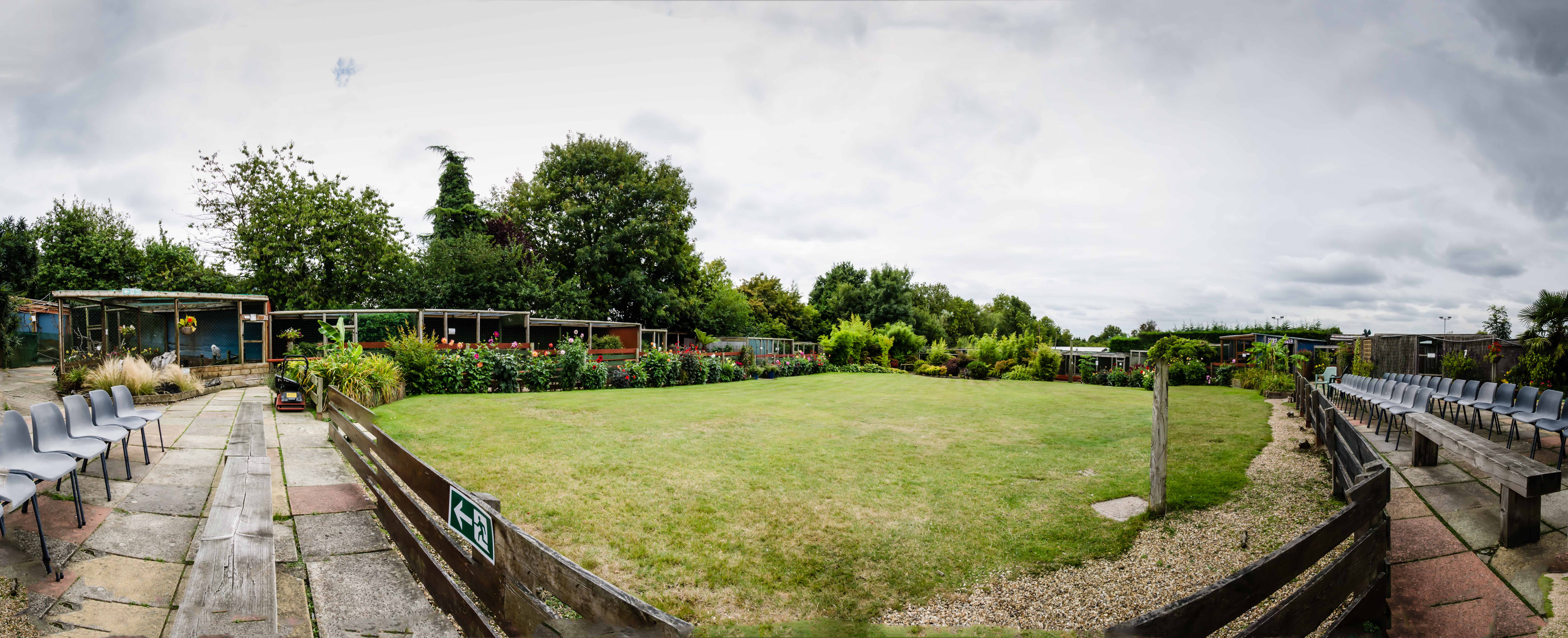
John and I took a picnic to the Birds of Prey Centre in Horsham this week.  We spent the morning wandering around taking photos, talking to the keepers, admiring the birds, having a laugh with the kookaburra and gazing at the flowers in the garden.  We got chatting to Julian, the owner, who works incredibly hard and gives every ounce of his energy to caring for the birds at the Centre.  He told us about some of the captive-bred birds of prey he has rescued, like the owl who was tethered in someone’s garden all its life, enduring all weathers and horrible children throwing stones at him, or the hawk who spent the first seven years of its life in a barn and never flew.  Sad stories indeed, but happy endings for these proud creatures now cared for at Huxley’s.

Huxley’s Birds of Prey Centre and Gardens

Despite the thick dark rain clouds overhead, the weather stayed dry, so we ate on the benches overlooking the well-kept lawn.  I had tuna and John had an egg and bacon sarnie which looked rather scrumptious.  I was feeling a little impish so I employed one of my ‘stretch and swipe’ techniques, managing to acquire a large piece of bacon, a blob of egg and a crust from John’s sandwich.  Good haul!  I had to nuzzle around him for several minutes afterwards to get back in his good books, but he was suitably impressed when I bravely fended off a wasp before having my early afternoon nap.

Flying Area

Flying Area

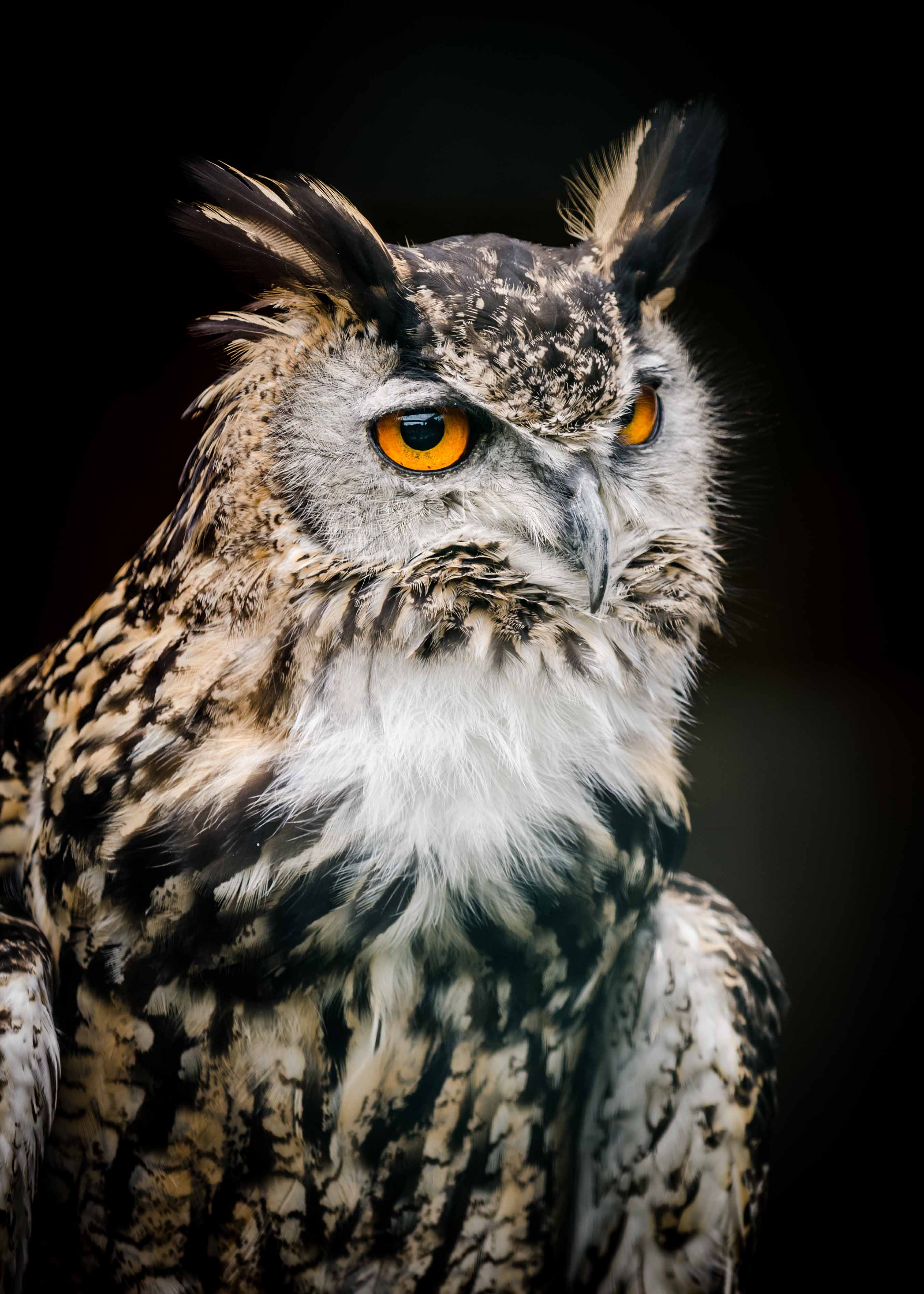
I was awoken at 2.30pm by Huxley the European Eagle Owl hooting at his dad (that’s Julian) as he got ready for the flying displays.  We were treated to a whole two hours of flying (pretty darn good for a fiver) and volunteers from the audience helped Julian and his team to fly the birds.  I wanted to have a go but the gauntlet (leather glove used in falconry) was too big for my paw and there were concerns for my safety.  Something about small mammals and talons!  Although John might argue that there’s nothing small about my gluteus maximus!

Huxley

Huxley

I opted for staying on my seat whilst we watched Cola the energetic falcon (lanneret) chasing the pigeons from the trees and Neo (another lanneret) fly to a swung lure (leather pad) which represents their airborne prey.  Khan (the Harris hawk) played hunting games with a ‘dummy bunny’ (dragged lure for a bird that would normally catch ground game) and the a rather enthusiastic kestrel called Turbo came out and squawked his little head off trying to impress his dad.  Mature majestic Marsha (a buzzard found in the Kent marshes) who flew graciously from person to person, not bad for an old girl of 30.  Most birds of prey typically live 10 to 15 years in their native environments but can live up to 5 times longer in captivity, thanks to good healthcare, plentiful food and no stress associated with surviving in the wild.

I always leave Huxley’s with a great sense of awe at the dedication shown by Julian and his team.  It’s not easy to run smaller zoos like this one with a limited budget and all the registers, insurances, inspections, licenses and other bureaucratic ‘hoops’ they have to jump through.  Calm down Shad!  Julian has a great sense of humour and was quite cheeky to me during the displays, teasing me because I asked him if birds have teeth!  But I can easily forgive such mischief because he loves cats, and has 3 of his own (all rescue of course).

Shad does Huxley’s Birds of Prey, Horsham

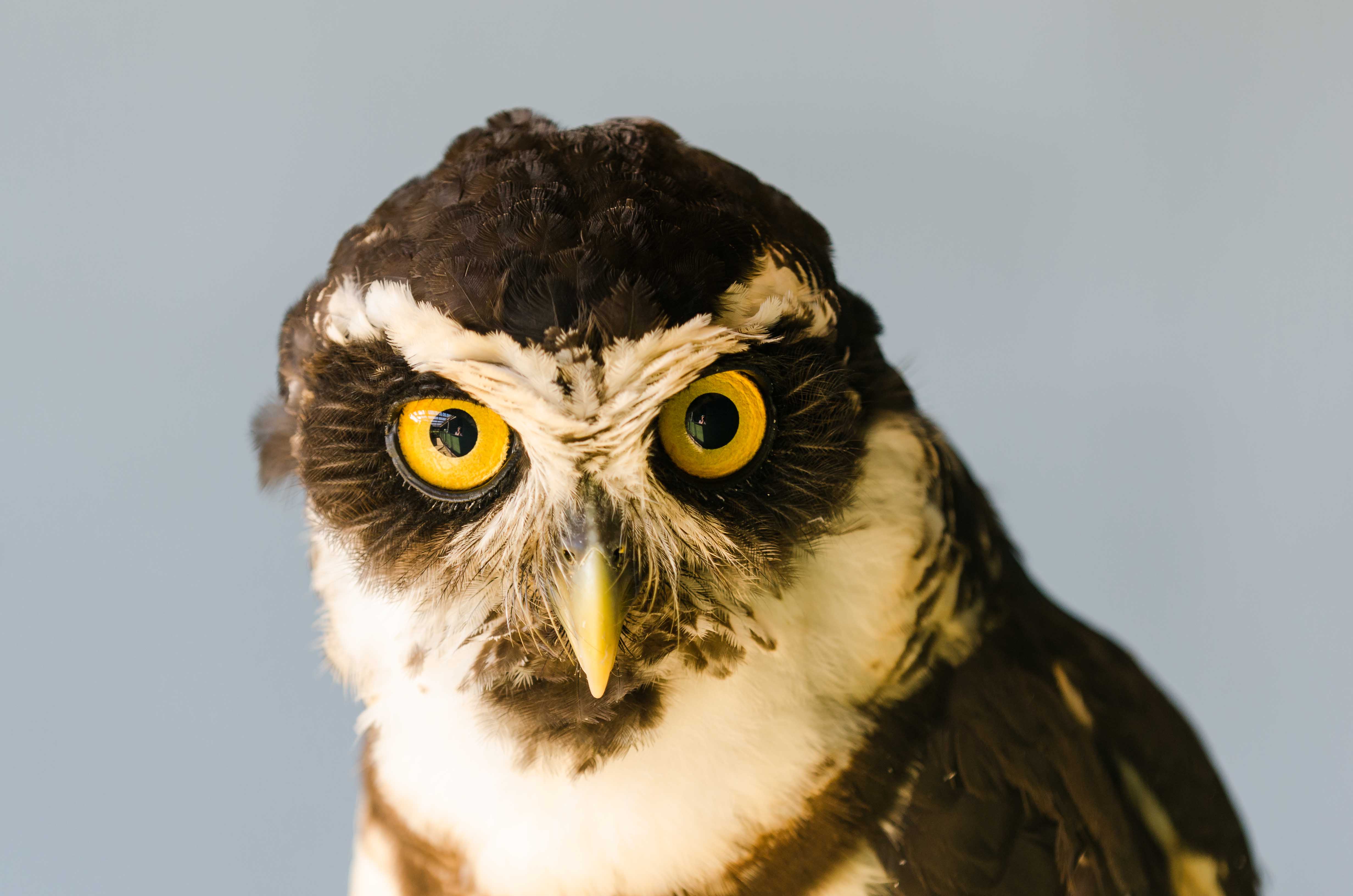
spectacled owl

spectacled owl

This spectacled owl (don’t you just love that name by the way?!) is one of the many falcons, eagles, owls, buzzards, hawks, kestrels and other character birds (such as kookaburras and ravens) who put on a spectacular show for visitors at Huxley’s Birds of Prey Centre in Horsham.

Read more – Shad does Huxley’s Birds of Prey, Horsham