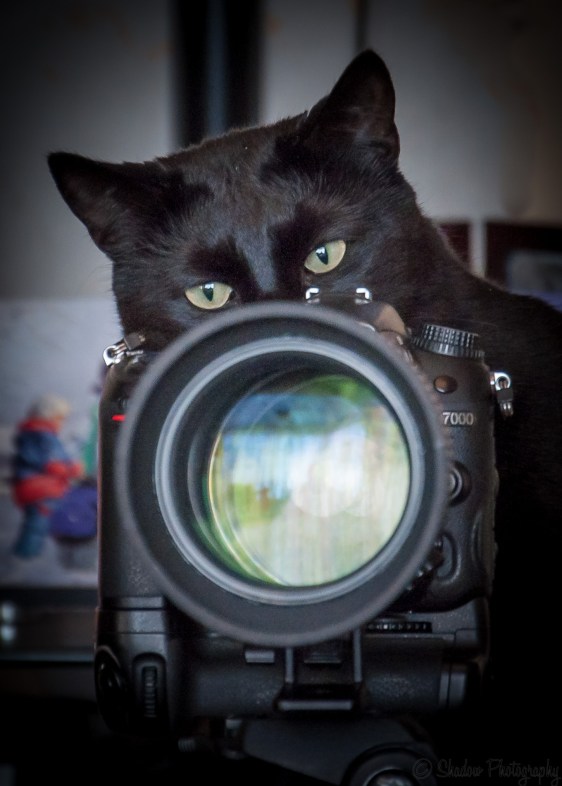
Shad admires the Amur

This beautiful guy is called Bagai (affectionately known by us photographers as Baggie) and resides at Marwell Wildlife Park.  He is around 18 months old and the keepers are hoping he will eventually breed with his wife-to-be Milla, after they are introduced to each other later this year.  He is an Amur tiger (also known as Siberian tiger) and is characterised by his bold rusty-yellow colour with narrow black/brown stripes, short legs and long tail, and supple muscular body.
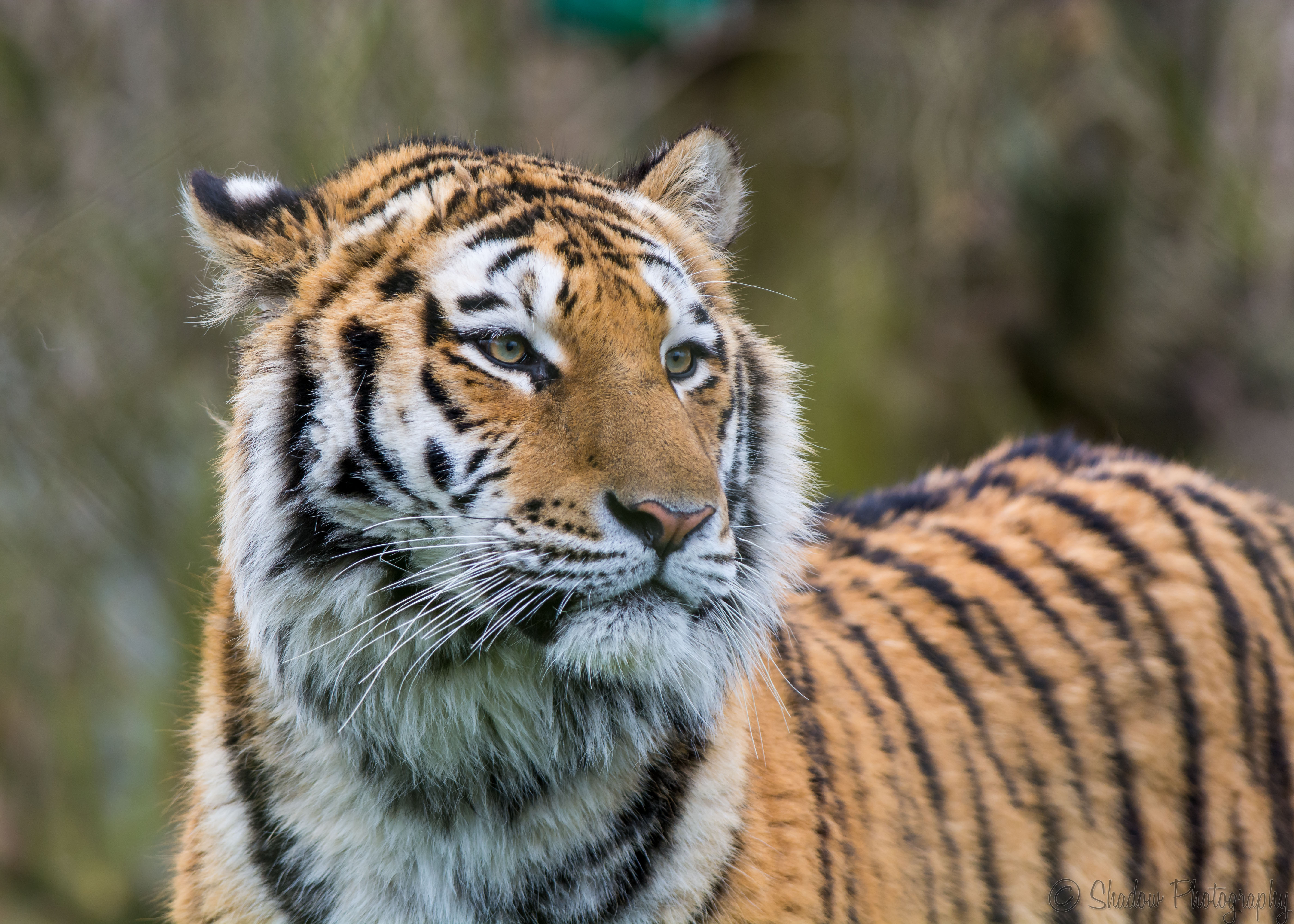
Bagai

I have a strong affinity for my big-cat kin, particularly the tigers, because of their ongoing crusade to survive against the odds.  There are now more Amur tigers in captivity than there are in the wild due to two main threats – poaching and habitat destruction. They are poached mainly to satisfy the demand for traditional oriental medicinal products made out of parts of the tiger.  Some gruesome examples include crushed tiger bone added to wine as a tonic and eyeballs rolled into pills as a cure for convulsions.  Revolting and totally without scientific basis.  Habitat destruction is often the result of increased demand for land as the human population grows, as well as intensified logging and agriculture for economic reasons. Habitat destruction in their natural environments of the Russian Far East, China and the Korean peninsula has not only removed the vegetation itself, which affects the soil and water balance, but also removed a significant portion of the tigers’ prey species, making them hungry and less inclined to breed.  Other threats include urban expansion, road construction, mining, fires and inadequate law enforcement.

There are nine recognised subspecies of tiger. Of these, the Caspian, Bali and Javan tigers are extinct and the South China tiger has not been sighted in the wild for over 25 years. The Indian or Bengal tiger is the most numerous but it is estimated that the total population is under 2,500 individuals.  In the 1940s, the Amur tiger was on the brink of extinction, with no more than 40 individuals remaining in the wild.  But thanks to vigorous anti-poaching and other conservation efforts in Russia with support from organisations such as the World Wildlife Fund, the population has recovered in the last decade and currently remains at around 400 individuals.  It is predicted that there will be none left in the wild within the next decade if human-kind does not take drastic action to save them.


But fear not my friends, it is not all bad news.  Big cats are prolific breeders and, given enough space, prey and protection, tigers can recover and re-claim their status as lord of the jungle. If you want to help, check out the WWF website for some ideas, such as sending an encouraging postcard to the rangers, the unsung heroes who work under harsh conditions on the frontlines to keep vulnerable wild tigers safe.  One thing all humans can do is ensure that any items they buy do not contain wild animal parts or lead to the unethical treatment of wild animals. Check that your paper and wood products are certified, that food products use certified sustainable palm oil and that your coffee was grown in harmony with its environment.

Shad talks about snowy owls

The snowy owl is one of the most recognisable of owls due to its cat-like yellow eyes and unmistakeable white plumage that echoes its Arctic roots.  It’s the largest (by weight) North American owl and is a carnivore, living up to 10 years in the wild and weighing around 3 to 7 lbs (up to 3kg), with a wingspan of 4 or 5 feet (up to 1.5m).  This regal creature is diurnal which means that it is active both day and night, unlike most owls that tend to hunt solely at night.  The snowy owl is a patient hunter with keen eyesight and extraordinary hearing which enable it to identify prey under thick vegetation or snow-cover, before swooping down to deftly seize its quarry with its sharp talons.  The snowy owl’s preferred meal is lemmings (a fierce little rodent smaller than a chipmunk), consuming 3 to 5 each day, and supplementing its diet with rabbits, rodents, birds and fish.

These magnificent owls sometimes remain year-round in their northern breeding grounds, but they are frequent migrants to Canada, the northern United States, Europe, and Asia.  Unless you’re planning to visit the high arctic, you’ll mainly find them in the wild during winter in windswept fields or wide-open areas such as dunes or shorelines, perhaps around Canada or Alaska.  They like tree-less places and rolling terrain where they can find a vantage point to survey the surrounding area, seeking out a good view by perching on telephone poles, buildings, hay-bales, or fence-posts.  In summer, the snowy owl hunts lemmings and other prey in the 24-hour daylight of the Arctic Circle.  Snowy owls were known to breed on the remote islands of the Shetland Isles north of Scotland in the past, but their status in Britain is now that of a rare winter visitor to the Shetland and Outer Hebrides region.

The snowy owl’s beautiful white plumage helps it to hide in its Arctic habitat. They breed on the Arctic tundra, where females lay a clutch of 3 to 11 eggs, depending on the availability of food, and in particularly lean times they may not breed at all. Parents are territorial and brave and will defend their nests against all threats, including wolves and humans.  Only the males are completely white, often flecked with dark brown when they are chicks, they get whiter as they get older.  The females are usually darker than males or may be white with dusky spots on their wings.

I don’t think John will mind me saying that he has the entire collection of Harry Potter movies (for his grandchildren to enjoy so he claims) and I have watched them through on several occasions.  Harry’s owl Hedwig is a snowy owl and although the character is a female, she is played by male owls because their plumage is so white and they are lighter than the females and therefore easier to handle for the human actors.  Seven different owls apparently played the role of Hedwig and their names are Oops, Swoops, Oh Oh, Kasper, Gizmo, Elmo and Bandit.

Shad snaps the smooth swift surfers

The recent wet and windy weather has sadly wreaked havoc for many people across the country.  I can’t imagine what it must feel like to see your home flooded with water and lose your most treasured possessions, like those photos and trinkets that have sentimental value and are irreplaceable.  John and I have been quite fortunate and although there has been some localised flooding and roads blocked, we have not had evacuations, power loss or injuries in the area.  But like many things in life, there are two sides to every story, and we witnessed the fun side of the unsettled weather the other day when we stopped on the sea-front to watch the guys and gals I their wetsuits riding the waves.  They looked so happy out there, pushing their bodies to the limit to harness nature’s powers just for the challenge of it, smiling and waving to us while the strong winds drove salty rain-drops into their faces.

Suddenly I picked up a powerful smell in the air and turned to see a pretty blonde canine whose enthusiasm for the outdoors bordered on bonkers!  Despite the pungent smell of wet dog (bet you thought I was getting a whiff of something else!), I chuckled to myself as I watched her bounding across the damp sand and shingle to the water’s edge to fetch a stick and go running happily back to her master for another go.  Dogs seem to get such a thrill from pleasing their loved ones and demonstrating their loyalty and dependence.  I think it’s important to point out here that cats are devoted too, and depend on humans for care and nourishment, but they show it in their own unique ways.  I like to surprise everyone after dinner with a mad sprint across the house, leaping into the air to land deftly on a piece of fluff in the carpet, hurtling up to John with my ears back, rubbing my cheeks lovingly against his leg, biting his toe, and then diving into my bed in front of the fire for a nice nap with a sweet innocent look on my face!

We got chatting with some of the onlookers watching the surfers, mostly friends and family members who had come to cheer them on.  They told us that the surfers were very serious about their sport and there was friendly rivalry between the kite-surfers and the wind-surfers, but it was all in good taste and part of the merriment.

Shad visits the otters

Otters are one of my favourite kinds of animals because of their happy disposition and kind-hearted attitudes towards each other.  I defy even the grumpiest of humans to watch them and not smile at their playful antics.  They obviously have their duties to perform such as hunting for food, feeding their young, building dens and protecting their environments, but they also engage in lots of fun behaviours just for the sheer enjoyment.

The Asian Short-Clawed otters (the smallest species of otter) were super sociable, chattering constantly to each other and gobbling up their food with gusto.  Apparently they can vocalise 14 different sounds to communicate with each other and they use their feet to find food under the rocks on the river beds where they live in the wild.  We watched the keepers try to replicate this at feeding time by throwing food in places where the otters had to dig using their sensitive webbed feet and those cheeky rascals didn’t miss a single morsel!  They happily chased each other around their enclosure, playing catch with a pebble and juggling a bit of fruit, squawking at the keepers every time they went by.

Different species will vary in their social structure, and the Eurasian otter is a more solitary animal, like rescue otter Millie.  The keepers have tried to introduce her to a companion on a couple of occasions but Millie prefers to be a singleton, making friends with the keepers instead, so she will remain in her safe permanent home at the Park.  The keepers also care for around 15 to 20 rescue otters every year, often orphaned young, using minimal human intervention and clandestine means to ensure their needs are met so that they can be released back into the wild.

The giant otter lives in family groups and is the most vocal of the otters, keeping in contact with its group through continuous barking and squeaking.  Habitat destruction and hunting for their fur are the major causes of their decline.  We watched Simuni and Akuri charging around their enclosure, posing for the cameras and diving into their water with ease and grace.

The North American River otter is the only river otter found north of Mexico and was at the brink of extinction due to its beautiful coat being used in the 1700-1800s in the fur trade which saw the slaughter of hundreds of thousands of these precious animals.  Thanks to the efforts of conservation and wildlife rehabilitation centres, their numbers are slowly increasing.  River otters are mostly active at night which might be why Hudson and Jasper were sleeping in their shelters when we visited.

Shad does the New Forest Wildlife Park again

This weekend was set to have a dry sunny day (an unusual phenomenon given the seemingly endless rain of recent weeks), so John and Natasha decided to give the New Forest Wildlife Park another whirl.  I woke up on Sunday morning to the fragrant aroma of cream cheese and bacon on bagels.  Mmm!  After a quick nibble on somebody’s breakfast, we packed our equipment and the people donned appropriate outdoor-wear before heading west.  Oh and don’t worry, I normally have a healthy protein-based breakfast but Sundays are special treat days and I’m not one to miss an opportunity!

One of my favourite things about the New Forest conservation park is the environment.  Surrounded by trees and shrubs, it feels like you’re deep in the forest and I half expected one of Robin Hood’s merry men to leap out of the bushes in a pair of tights!  Many of the enclosures are open for the animals to roam freely, such as the sika deer, the rabbits and the wallabies.  When I say open, there are still double gates at the end of each section to ensure the animals don’t stray far.  Of course, the open enclosures are only appropriate for certain creatures, not including the pack of 5 wonderful wolves we saw running around their paddock.  We watched them feed and the keeper gave us a talk, telling us all about how the wolves communicate more by body language than by sound, and how much more active they are than cats (the cheek)!  These beautiful creatures were once found in large numbers in this country but hundreds of years of persecution have exterminated them from our lands, a memory than lingers in the instincts of the wolves we saw making a dash for their food before putting a safe distance between themselves and the humans.

There are so many furry mammals there, like the pole-cats, badgers, water voles, ferrets and the elusive pine-martens who were particularly hard to spot.  I also met some of my most impressive and resourceful cousins, the endangered Scottish wildcats (felis silvestris grampia to give them their Latin name).  They resemble muscular domestic tabby cats, but with thicker coats and bushy black-and-brown ringed tails.  They survived human persecution for five hundred years more than the British wolf did, and over a thousand years more than the British lynx.  They are now only found in Scotland and their intelligence, patience and agility are respected by Highland farmers and gamekeepers who recount tales of the wildcat mother dying to protect her kittens from attack or dipping their paws into shallow water to scoop out fish for dinner.  These misunderstood creatures have been portrayed as ferocious but, like most pussy-cats, they enjoy peace, routine, and personal space, and will only attack if they are hunting for food or feeling cornered.

The distinct whiff of dung hit my nostrils and I caught sight of the long shaggy brown coats of the bison wandering around chewing on the grass.  Even bison have been affected by habitat loss and hunting over the years and are now mostly found on ranches or in areas of conservation.  These particular animals are European bison and they are extinct from the wild.  They might grow to 6 feet tall at the shoulder, 10 feet in length and 1,000 to 2,000 pounds in weight, but their pastimes include rutting and wallowing in mud and they stink.

You have no idea how tempted I was to arch my back, raise my hackles and mock charge sideways towards the little harvest mouse chomping on seeds and grains from a bowl in its glass-fronted pen.  But I am a civilised rational feline who can operate a camera and take part in philosophical debate, so I can certainly exercise restraint over my base urges.  With blunt noses, tiny black eyes and hairy ears, harvest mice are the smallest British rodent, around 5 cm long and weighing a tiny 5 to 10 grams.  They have auburn brown fur with a white underside and their scientific name is micromys minutus (how cute is that!).  They seemed very busy, climbing, building their nests and feeding, so we left them to it, and headed off to see the lynx cat.

I sauntered coyly towards the enclosure that contained the lynx, and my eyes narrowed with envy as I caught sight of her elegant tufty ears and thick fluffy ruff that framed her face.  This Eurasian lynx is called Munchkin and she has a stimulating enclosure on a slope filled with trees, wooden climbing frames and sheltered areas.  We gave each other the obligatory eye contact and subtle ear twitches communicated our understanding of each other’s situations.  This solitary and secretive cat allowed us to watch her for a while before bounding up on to one of her ledges in a tree and surveying us from on high.  The Eurasian lynx was an original native of the British Isles but disappeared from Western Europe due to habitat destruction and human persecution.

Next time I’ll tell you about some creatures I met who made me laugh so much.  They live with their families, have whiskers and offspring called pups, and enjoying romping playfully.

The Ferry Home

We arrived at Fishbourne at 3.30pm and took our place in line for the ferry.  The sun was getting low in the sky, making it gloomy and chilly, so I was pleased when the ferry turned up and we rolled on to the ramp for the journey back to Portsmouth.  As the ferry turned around to face the right way, the gulls flew around the boat and the winter sun glistened on the water.  John decided he would go outside to snap a few pictures and I said I’d join him shortly.  But as I sat comfortably in the warm listening to the humming engines and the splashing of the water against the sides of the ferry, my head lolled sideways and my paws dangled over the edge of the soft seat and I was gone, snoring my furry little head off apparently.

When I came to, Natasha was admiring a rather splendid photo John had taken of the sunset.  I gave my face a quick lick to get the sleep from the eyes and looked around.  I could the Solent Sea Forts coming into view, telling me that we were almost there.  The four forts were built on sandbanks and shoals to defend Portsmouth Harbour from attack and also have the advantage of warning ships about the shallow places and sandy elevations that constitute a hazard to navigation.  The sea forts were the last thing I remembered when I woke up at home in my favourite bed next to the radiator, and I went back to sleep to dream that I was romping through the forests with the beautiful jaguars and the lovely tigers.

Geoffroy’s cat

Geoffroy's cat by Stavros043
Geoffroy’s cat, a photo by Stavros043 on Flickr.

It was cloudy and windy but that didn’t stop me from going mad with the camera again at Colchester Zoo with John, Natasha and Jason. Most of the shots were at silly ISO and stupidly slow shutter speeds (photography nerds will know what I’m talking about). The rain came earlier than expected, but Colchester Zoo is 60 – 70% under cover so my fur didn’t get too wet!

I hope you like the picture of this lovely little cat who looks a lot like a domestic cat and is a similar size.  In fact, it is known as the Geoffroy’s cat and is native to the southern and central regions of South America.  Unfortunately its another one that is considered to be at ‘near threatened’ status by the IUCN (International Union for the Conservation of Nature) because of concern over land-use changes in the regions where it lives.

Shad does the Isle of Wight Zoo

A huge roaring tiger was leaping off the roof towards us.  Of course it never actually reached us because it was made of plastic!  It’s the first thing I saw as we pulled up to the Isle of Wight Zoo on this sunny clear winter day.  I was chomping at the bit to go inside because, although the zoo has a variety of animals, it specialises in tigers and lemurs, both beautiful and intriguing creatures that a sassy cat like me can relate to.  It’s a family-run zoo built within the ruins of a Victorian Fort constructed to guard Sandown’s coast and its fundamental goals revolve around care, conservation and education.

We wandered in and caught sight of the black and white ruffed lemurs with their paws spread out and their bellies on display, laying on a rock in a sunny spot of their enclosure.  They lifted their heads lazily and watched me go by as if I was impudent for disturbing their sunbathing.  There were some lively ring-tailed lemurs, black lemurs and red ruffed lemurs, and the slightly more timid grey mouse lemur and white-fronted brown lemurs.  I had no idea there were so many types of lemur!  The mongoose lemur (named McLovin) was originally taken from the wild by illegal traders and sold as a pet to a Polish sailor.  I’m so glad he ended up here at the Isle of Wight Zoo where the keepers care deeply for this lost little soul and make every effort to encourage his natural behaviour and enrich his environment.

Like McLovin, many of the animals at this zoo have their stories.  Some have been rejected by their prides or family units, others rescued from circuses or animal performance groups, or liberated from lives of stress and misery.  Natasha has visited this zoo before and is friendly with the keepers, so she gave us the inside scoop on the histories of me of the big cats.  Rajiv the tiger (an Indian/Siberian cross) was bred by a circus organisation in the UK and sent to the USA to be a ‘celebrity animal’, posing with people and opening hotels.  I can only speculate as to what unkind means his owners used to keep him pacified during the times he was on show.  He was apparently kept in a concrete pen and suffered chemical burns to his elbows because his owners would hose-out the pen with him in it.  His life at the zoo is a thousand times better than the life he had before.

Zena the white tiger suffered with eye problems for many years due to the inbreeding history of these animals and had her right eye removed due to glaucoma in 2006, which is why breeding white tigers is not ethical practise.   When we saw her, she was parading up and down her enclosure with a muddy wet tummy, having splashed around in the puddles and got that fluffy white coat of hers all dirty!  She is amazingly 17 years old and enjoying her retirement with her sister Zia who you can see in the photograph flopped out on a rock.

Casper is the white lion you see in this iconic pose as he stands on top of the rocky hillock in his enclosure surveying the surrounding terrain.  Lions are under threat all over Africa as they lose habitat and compete with humans and Casper has played an active role in helping to raise awareness of their plight by taking part in a project for Lionaid.  What a star!  He had quite the entourage as we looked up at him in awe and he went all alpha-male on us, puffing out his chest, shaking his magnificent mane and grunting.  We were doing a bit of grunting ourselves after holding awkward positions for ages waiting to get some good shots of Casper so we decided to go to the café for some lunch.  As we sat comparing images, my cat instincts kicked in and I felt eyes on me.  I looked around to discover we weren’t alone in the café as a pen full of degus was checking me out.  I gave them a flick of the tail and a shimmy-wiggle as I trotted out of the door.  Well, you’ve gotta give ‘em something!!

My brazen swagger was nothing compared to the bold strides being taken by Tequila the jaguar.  This striking beast had black spots and rosette-shaped patterns across her coat, a muscular body, robust head and powerful jaw.  She arrived at the zoo in 1999 with some behavioural problems thanks to her less-than-happy experience with an animal entertainment troupe.  However, she now displays natural and healthy behaviour as a result of the care she receives at the zoo.  The jaguar is the third largest feline after the lion and tiger and populations are in rapid decline.  As their habitats decrease in size and richness of wildlife, these poor things are being forced to venture too close to human populations in their desperate search for food and are being killed by farmers and ranchers for attacking the livestock.  So much damage has been done through poaching and deforestation that the road ahead is a tough one and the future of these exceptional cats is bleak, but organisations such as the Wildlife Conservation Society are making efforts to protect jaguar populations and we can only hope that this help has come in time.

I liked this zoo’s ethos and their willingness to take on animals that other zoos may not want because of their age or history.  The keepers know the characteristics and requirements of each individual big cat in their care, down to disposition, sociability, allergy status, food preferences and even the noises they make.  You can read more about the animals on the website.  Meantime, one small domestic short-haired cat, two adult humans and one child made their weary way back to the car with exhausted smiles on their faces for the journey home.

http://www.isleofwightzoo.com/

Shad goes on the water for the first time

My closest and most daring experience with water to date has always been my mad dash through the shower as John turns it on.  For some reason, I hear the shower door open and the motor start to run and I am overcome with an impulse to hurtle on to the shower floor and leap across it before the water hits.  But my encounters with water took a fresh turn on Sunday when John and I ventured across the seas with John’s daughter Natasha and her little boy.  When I say ‘the seas’, I mean the bit known as the Solent between coastal Hampshire and the Isle of Wight, which from my perspective was like an ocean.

We arrived in Portsmouth, first in the queue for the ferry, and I felt like Jack Sparrow in Pirates, all villainous and swash-buckling, ready to board the Black Pearl.  I got so excited I had to excuse myself for a moment and use the facilities.  The ferry arrived at port and it looked like a giant rusted metal rectangle floating on the shimmering surface of the water.  I looked resolute at John and he smiled reassuringly as he drove the car on to the boat and parked at the front.  I stayed in my travel basket until we found a seat upstairs and got our cameras out.  As we made our way to the outer deck, I could smell the salty sea air and hear the water swell as the Black Pearl parted the waves.

The Solent was calm and a murky turquoise green and the sky was blue with the odd puffy greyish-white cloud overhead.  An aircraft carrier rested motionless at the harbour, speed boats powered past us and huge cargo ships sat ominously in the distance, their boxy silhouettes a reminder of the other world that exists at sea.  The mainland got smaller and the Spinnaker Tower disappeared into the distance as we cruised towards the roughly diamond-shaped island that is known as an area of outstanding natural beauty.  We soon arrived at Fishbourne, disembarked and set off through the narrow pot-holed country lanes and rural landscape towards the dramatic chalky coastline on the other side of the island at Sandown, where I caught sight of our destination.

http://www.wightlink.co.uk/